Choosing greener salon supplies from China requires more than finding a leaf symbol on a bottle. Salon owners need evidence, traceability, and practical performance. This guide explains how to choose eco-friendly salon products by examining ingredients, packaging, manufacturing, certifications, and supplier behavior.
The Ellen MacArthur Foundation reports that packaging uses roughly 40% of global plastic production. That figure makes refillable shampoo containers, recycled plastic, aluminum tubes, and concentrated formulas worth examining. However, lighter packaging is not automatically better. A fragile bottle may create more waste through leakage and replacement. UNEP’s 2023 report, Turning off the Tap, also stresses prevention, reuse, and improved recycling systems. These principles matter when comparing Chinese suppliers. Ask for material specifications, recycled-content percentages, factory audits, batch records, and disposal guidance. Request evidence, not attractive promises.
Sustainability educator and circular-design expert Leyla Acaroglu states, “There is no such thing as a sustainable product, only more or less sustainable systems.” Her point is uncomfortable but useful. A biodegradable towel still consumes resources. A certified ingredient can travel thousands of kilometers. No checklist is perfect. Salon professionals should therefore compare total impact, service life, worker conditions, formula safety, and supplier transparency. Look for credible certifications, such as COSMOS, Ecocert, FSC, or ISO 22716, while checking their scope and validity. A logo alone proves little. The best choice is usually the product that performs reliably, reduces repeated consumption, and comes from a manufacturer willing to disclose verifiable details.
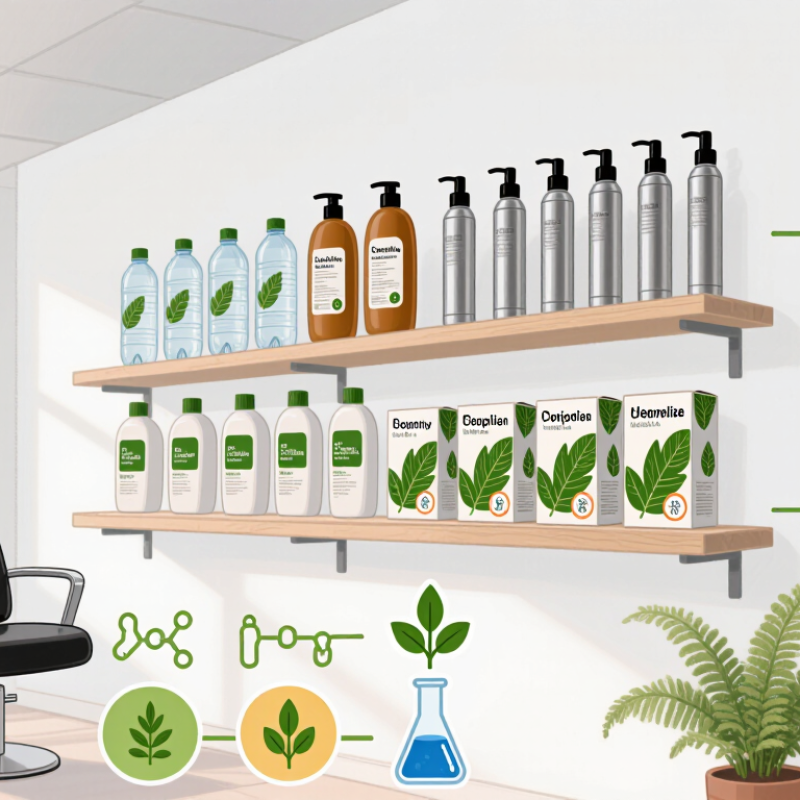
How to Choose Eco Friendly Salon Products from China?
Eco-friendly standards must be defined before comparing Chinese salon suppliers. “Natural” or “green” labels are not enough. Check the ingredient list, packaging materials, production controls, and disposal impact. A recyclable bottle is not automatically a sustainable product. Ask for complete INCI ingredient information, safety data sheets, certificates of analysis, and batch traceability. Relevant evidence may include ISO 14001 for environmental management, ISO 22716 for cosmetic manufacturing practices, or FSC certification for paper packaging. Each certificate should match the actual product and factory.
Tips: Request recent third-party test reports. Verify the testing laboratory. Compare the report date, product code, and factory address. Ask whether recycled materials are independently verified. Also review water use, energy sources, waste handling, and shipping methods. Small details matter, especially for shampoos, hair color tools, towels, and disposable accessories. Suppliers should explain how defects and returned goods are managed. Vague answers deserve caution.
A practical review should include a factory audit, not only polished documents. Product claims must be measurable and legally acceptable in the target market. “Biodegradable” needs a defined test method and timeframe. “Cruelty-free” also requires credible supporting evidence. I have found that packaging often receives more attention than formulation impact. That can be misleading. Request improvement records, corrective actions, and updated environmental goals. Reliable suppliers accept questions, provide consistent data, and admit limitations instead of promising perfection.
Request complete ingredient lists, safety data sheets, batch records, and certificates of analysis. Ask for traceability from production to shipment. Recent third-party reports matter. Check the laboratory, report date, product code, and factory address.
Relevant evidence may include ISO 14001, ISO 22716, and FSC certification. Each certificate must match the actual product and manufacturing site. A certificate alone proves little.
Request allergen disclosures, microbial tests, heavy-metal results, and stability data. Review performance after heat, cold, light, and transport vibration. Test samples from production batches, not showroom stock.
Check texture, scent, color stability, dispensing, leakage, and service performance. Test during busy working hours. Small tests reveal large problems. Sometimes, my first impression is wrong.
Check recycled content, refill options, material type, and local recycling access. A recyclable bottle is not automatically sustainable. Compare shipping weight and leakage risks too.
Measure cost per salon service, not only cost per bottle. A thin formula may need two pumps instead of one. Include shipping, training, returns, waste, lead times, and minimum order quantities.
Choose measurable priorities, such as lower waste, reduced water use, refillable packaging, or plant-based ingredients. Match every product to one clear goal. Otherwise, “green” becomes vague purchasing language.
Ask about energy use, wastewater treatment, waste handling, defects, returned goods, and corrective actions. Request improvement records and updated environmental targets. Honest limitations are better than perfect promises.
Refill pouches may reduce plastic but increase leakage during transport. Concentrated formulas can reduce shipping emissions but require staff training. Review these trade-offs with stylists and clients. Sustainability is rarely perfect.
Choosing sustainable products for a salon begins with understanding what “eco-friendly” truly means for your business. Learning how to choose eco-friendly salon products involves evaluating biodegradable or responsibly sourced ingredients, recyclable or refillable packaging, low-waste production methods, and energy-conscious manufacturing. It is also important to review product safety, ingredient transparency, performance, and suitability for professional use rather than relying on environmental claims alone.
When purchasing from China, salons should carefully verify supplier information, production capabilities, quality-control systems, and relevant environmental or safety certifications. Requesting documentation, samples, and clear product specifications can help confirm that a supplier’s claims are reliable. Finally, compare durability, effectiveness, packaging impact, shipping considerations, and total cost to determine the best overall value. The right products should support your salon’s sustainability goals while maintaining consistent results, customer comfort, and responsible long-term operations.

 Jura Beauty