How to Choose the Best Professional Salon Products?

Time:2026-10-25 Author:Henry
0%

Choosing salon products should begin with the client, not the product shelf. Hair texture, porosity, scalp condition, chemical history, and styling goals all influence the right choice. A thick, bleached curl needs different care from fine, untreated hair. The labels may look impressive. They are not enough.

Trichologist Philip Kingsley famously said, “Hair is a barometer of health.” That principle matters when learning how to choose professional salon products. A professional should examine dryness, breakage, oiliness, sensitivity, and elasticity before recommending shampoo, conditioner, treatments, or styling products. Ingredient lists deserve attention. Look for suitable cleansing agents, conditioning ingredients, heat protection, and clear usage directions. Also check the manufacturer’s professional guidance. Stronger is not always better.

A practical consultation can include a strand test, a scalp assessment, and a small product trial. Observe how the hair feels after drying, not only how it looks immediately. A product that creates shine may still leave buildup or stiffness. Even experienced stylists can overestimate fragrance, packaging, or social media popularity. I have seen attractive products disappoint when they ignored porosity or scalp needs. That is a useful warning.

Reliable selection also requires honest communication. Explain expected results, limitations, frequency, and possible sensitivity. Recommend patch testing when appropriate. Keep client records and review the result at the next appointment. There is no universal best product. The best professional choice is evidence-informed, client-specific, and flexible enough to change when the hair changes.
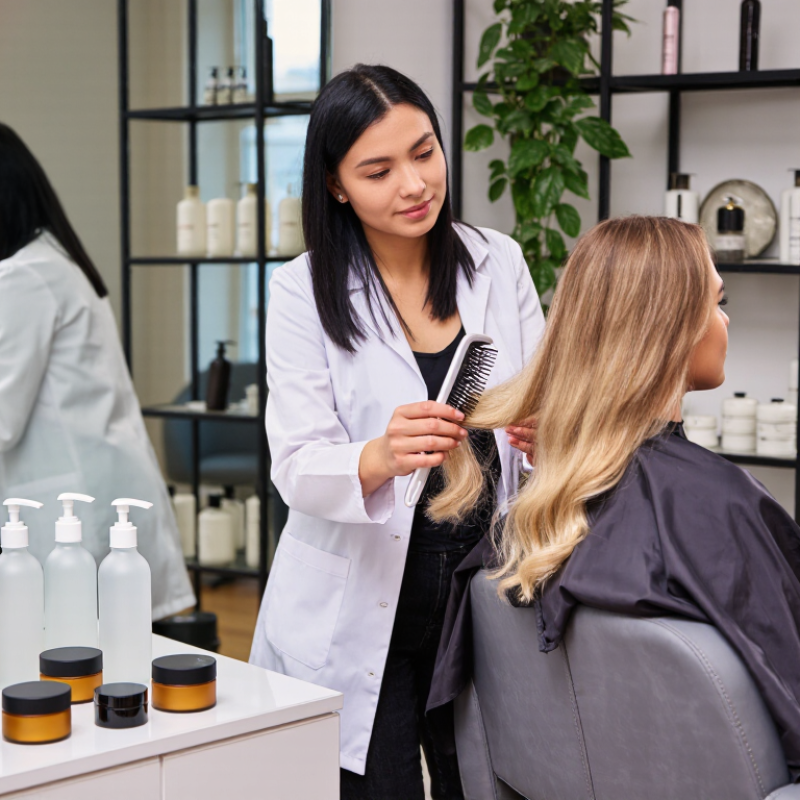
How to Choose the Best Professional Salon Products?

Define Client Needs Through Hair Porosity, pH 4.5–5.5, and Service Goals

How to Choose the Best Professional Salon Products?

A strong product choice begins with the client’s hair porosity, not a colorful label.

Low-porosity hair often resists water and feels coated quickly. It may need lightweight conditioners and controlled heat during treatment. High-porosity hair absorbs water fast but loses moisture just as quickly. It usually benefits from richer conditioning, gentle cleansing, and occasional protein support.

Medium-porosity hair can still behave differently after coloring, bleaching, or repeated heat styling. Porosity tests are useful clues, not absolute facts.

The floating-hair test can mislead me, especially when buildup remains. I trust touch, absorption speed, elasticity, and the client’s service history more.

Product pH also affects the service result.

Healthy hair and scalp commonly respond well to mildly acidic formulas around pH 4.5–5.5. This range can help the cuticle lie flatter and reduce a rough, swollen feel.

However, every service has a different goal. Lightening requires controlled chemical performance, while post-color care should support softness and color retention. A pH strip can provide evidence, but it cannot replace professional judgment.

I check the product instructions, perform a strand test, and watch how the hair reacts during processing. A client may request dramatic brightness, yet their fragile ends may only tolerate a softer change.

That conversation matters.

My first recommendation is not always perfect. Reviewing the result honestly helps refine the next formula, timing, and aftercare plan.

Screen Chemical Safety Against OSHA’s 0.75 ppm Formaldehyde PEL

Choosing the best professional salon products requires more than comparing results, scent, or price. Chemical safety deserves equal attention. OSHA’s formaldehyde permissible exposure limit is 0.75 parts per million (ppm) over an eight-hour workday. OSHA also sets a 2 ppm short-term exposure limit for any 15-minute period. These limits help salon owners evaluate products, ventilation, and work routines.

Read the Safety Data Sheet before purchase. Look for formaldehyde, formalin, methylene glycol, or ingredients that may release formaldehyde during heating. Do not rely only on “gentle” or “low odor” claims. A product may smell mild and still require careful control. Ask the supplier for current test data when possible. Independent laboratory results are more useful than vague marketing language. In practice, product labels are sometimes incomplete. That is worth questioning.

Tips: Use local exhaust ventilation near treatment areas. Keep containers closed between applications. Measure room airflow, especially before heated services. Train staff to recognize eye, throat, or breathing irritation. Keep exposure records and review them regularly. If measurements approach 0.75 ppm, consult a qualified occupational safety professional before continuing normal use. My own preference is to choose a slightly less dramatic result when the safety evidence is clearer. Performance matters, but uncertainty matters too.

Verify Manufacturing Quality Under ISO 22716 Cosmetic GMP Standards

Choosing professional salon products requires more than checking ingredients, packaging, or price. Manufacturing quality matters because salons handle repeated use, frequent opening, and demanding storage conditions. ISO 22716:2007 provides Good Manufacturing Practice guidance for cosmetic production, quality control, storage, and shipment. Ask suppliers for their current ISO 22716 audit evidence, manufacturing address, and batch traceability records. A certificate alone is not enough.

Review practical details. Can the manufacturer identify raw-material suppliers? Are weighing records, cleaning logs, microbial tests, and release decisions documented? ISO 22716 expects trained personnel, controlled equipment, and procedures for handling deviations and customer complaints. McKinsey’s 2023 beauty market report projected the global beauty industry could reach about 580 billion dollars by 2027. That growth increases product choice, but it can also reward speed over process discipline. Be careful. A polished website proves very little.

Tips: Request a recent Certificate of Analysis for a representative batch. Check manufacturing and expiry dates. Confirm that packaging protects the formula from heat, light, and contamination. Ask how recalls and corrective actions are managed. Compare written procedures with actual factory conditions when possible. A short video tour may help, but an independent audit is stronger. Do not confuse “made in a certified facility” with certification of every product. Even experienced buyers miss small inconsistencies. Record your findings before approving a supplier, and revisit them when formulas, facilities, or packaging change.

Check EU Allergen Labels Against the Regulation’s 80+ Fragrance Allergens

How to Choose the Best Professional Salon Products?

EU allergen labeling deserves close attention when selecting professional salon products. Regulation (EU) 2023/1545 expands fragrance allergen disclosure from 26 substances to more than 80. These allergens must appear in the ingredient list above 0.001% in leave-on products or 0.01% in rinse-off products. Check the bottle, not only the product description.

A practical salon check starts with the INCI list near the wash station. Look for named substances such as limonene, linalool, citral, and geraniol. Then compare them with the client’s consultation notes. Cosmetics Europe’s Market Performance Report 2024 valued Europe’s cosmetics market at approximately €104 billion in 2023, showing how widely these products are used. Wider use requires better checking. It is not merely paperwork.

The European Commission’s Regulation (EU) 2023/1545 provides extended transition periods for industry, but salons should build label checks now. My own checking is not flawless. Small print and reformulated products can cause mistakes. Request current ingredient information from suppliers, record product changes, and keep a simple client sensitivity log. Safety Data Sheets may help, but they do not replace the cosmetic ingredient list. A professional choice considers performance, concentration, packaging clarity, and individual exposure. Marketing claims can be vague. INCI names are more useful.

Compare Cost per Service, Performance Data, and Salon Profit Margins

Choosing professional salon products requires more than comparing shelf prices. In my salon experience, I learned to calculate cost per service before trusting a low wholesale figure. Divide the product cost by the measured amount used, then add disposable supplies and processing time. A color service using 45 milliliters may seem inexpensive, but extra mixing, correction, or rinsing can change the result. Track at least ten real appointments. Small samples can mislead. Record usage, service duration, rework, and client feedback.

Performance data should be practical and verifiable. Check coverage, processing consistency, finish quality, and client satisfaction after several visits. Ask suppliers for technical sheets, safety guidance, stability information, and recommended usage. Then test products under normal salon conditions. One formula performed well in a controlled trial but slowed my busiest afternoon. I nearly ignored that detail. Compare the full service margin, not product cost alone. Use this calculation: service price minus product cost, labor, overhead, and correction allowance. A product saving two minutes may increase daily capacity, while inconsistent results can quietly reduce profit.

Tips: Measure every application with a scale or marked dispenser. Review the numbers monthly. Include training time and product waste. My first spreadsheet missed both, which made the margin look better than reality. Ask stylists for honest feedback, not polite approval. Reliable decisions come from repeated results, clear records, and a willingness to revise assumptions.

FAQS

Why should hair porosity guide product selection?

Porosity shows how quickly hair absorbs and loses moisture. Low-porosity hair may need lightweight conditioners and controlled heat. High-porosity hair often needs richer conditioning and gentle cleansing. Porosity is only a clue.

Can a floating-hair test accurately identify porosity?

Not always. Product buildup can make hair float and distort the result. Touch, absorption speed, elasticity, and service history provide stronger evidence. I can still misread it.

What pH range commonly supports healthy hair and scalp?

Mildly acidic formulas around pH 4.5–5.5 may help the cuticle lie flatter. Hair can feel less rough and swollen. The service goal still matters.

Should the same pH approach be used for every salon service?

No. Lightening needs controlled chemical performance, while post-color care focuses on softness and color retention. A pH strip offers evidence, not complete judgment. Test a strand first.

How should professionals handle fragile ends during dramatic color requests?

Discuss the difference between the desired brightness and the hair’s actual tolerance. Fragile ends may only support a softer change. The client conversation matters.

What manufacturing records should a professional buyer request?

Request current GMP audit evidence, the manufacturing address, and batch traceability records. Also review a recent Certificate of Analysis for a representative batch. A certificate alone is insufficient.

Which factory quality details deserve close attention?

Check raw-material suppliers, weighing records, cleaning logs, microbial testing, and release decisions. Review trained personnel and deviation procedures. Small gaps matter.

How can a salon evaluate packaging and future product safety?

Confirm manufacturing and expiry dates. Check whether packaging protects the formula from heat, light, and contamination. Ask about recalls and corrective actions. A polished website proves little.

Conclusion

Choosing the right products is essential for delivering safe, consistent, and profitable salon services. To understand how to choose professional salon products, begin by evaluating each client’s hair porosity, condition, and desired result. Select formulas that support the hair’s natural balance, including a suitable pH range of approximately 4.5–5.5 when appropriate. Product selection should also match the planned service, whether it involves cleansing, conditioning, coloring, smoothing, or repair.

Safety and quality require careful verification. Review chemical information and screen products against OSHA’s formaldehyde exposure limit of 0.75 ppm, while following proper ventilation and handling procedures. Confirm that the manufacturer follows ISO 22716 cosmetic Good Manufacturing Practices, which help support consistent production and quality control. For products sold or used under EU requirements, check ingredient and allergen labeling, including the regulation’s expanded list of more than 80 fragrance allergens. Finally, compare cost per service with performance data, client satisfaction, rebooking potential, and overall salon profit margins to make a practical, informed decision.

Henry

Henry

Henry is a dedicated marketing professional with a profound expertise in the company's offerings. With years of experience in the industry, he possesses an impressive understanding of the market dynamics and consumer behaviors that drive success. Henry is committed to sharing his insights through......