What Certifications Should Salon Products Have?

Time:2026-10-01 Author:Isabella
0%

When salon owners ask, “what certifications should salon products have,” the answer is rarely one universal badge. A professional shampoo, hair color, or smoothing treatment may need different evidence. The product’s ingredients, claims, manufacturing process, and sales market all matter. A certificate can support trust, but it cannot replace careful safety review.

The U.S. Food and Drug Administration explains that cosmetic products generally do not require premarket approval. Linda Katz, former FDA Director of the Office of Cosmetics and Colors, stated, “The law does not require cosmetic products and ingredients to have FDA approval before they go on the market.” That distinction matters. FDA compliance is not the same as FDA certification. Under the Modernization of Cosmetics Regulation Act, manufacturers now face stronger requirements for facility registration, product listing, safety substantiation, and adverse-event reporting. The FDA’s guidance should be checked directly because requirements continue developing.

Reliable salon purchasing should also examine ISO 22716 good manufacturing practices, third-party organic standards such as COSMOS or USDA Organic, and cruelty-free programs with transparent auditing. ISO 22716 supports controlled production, yet it does not automatically prove that every formula is safe or effective. Circana’s beauty market reporting shows continued consumer interest in premium and “clean” products, but “clean” remains an inconsistent marketing term. That is the uncomfortable part.

A verified ingredient list, batch records, safety data, and supplier documentation may reveal more than a polished logo. This guide explores what certifications should salon products have, while questioning claims that sound impressive but lack independent evidence.
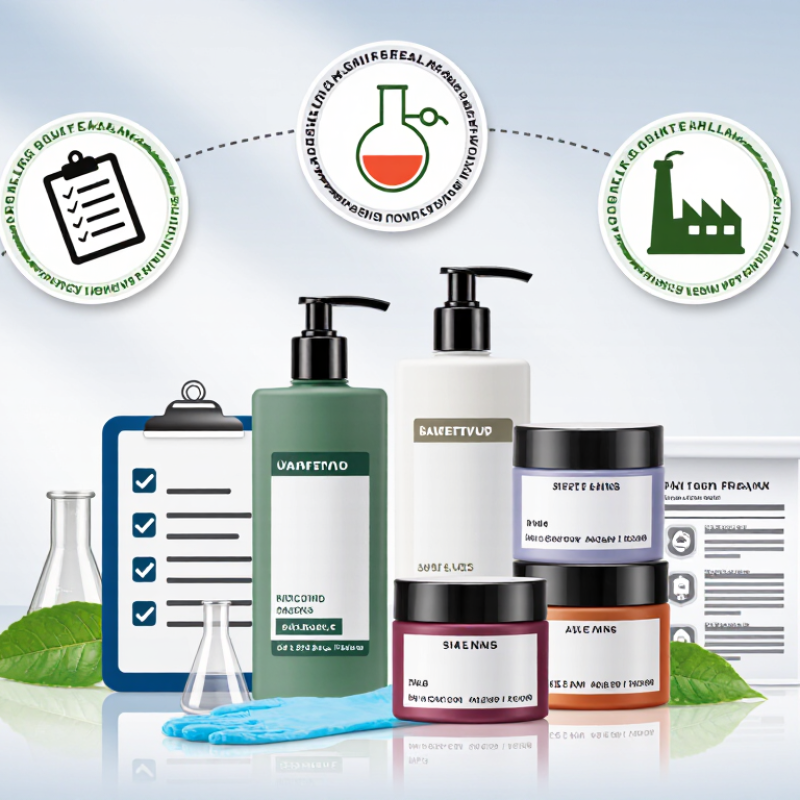
What Certifications Should Salon Products Have?

What Certifications Mean for Salon Products

Certifications on salon products are more than decorative seals. They show that an independent body has reviewed specific claims, ingredients, manufacturing steps, or safety controls. The meaning depends on the certification’s scope. A quality mark may address factory procedures, while another may verify organic ingredients or responsible sourcing. These are not interchangeable promises.

In daily salon work, certification details can guide better decisions. Check the certifier’s name, approval number, issue date, and product category. Confirm that the certificate covers the exact formula, not only the manufacturer. A batch number should also connect the bottle to documented quality checks. Details matter. A product labeled “professional” is not automatically certified. Certification does not guarantee perfect results for every client, either.

Reliable information should be easy to trace. Look for publicly available standards, testing methods, and renewal requirements. If a seller provides only a vague logo, ask for supporting documents. Salon professionals should also review ingredient lists and follow usage instructions, even when a product carries several certifications.

I have learned that a certificate can build confidence, but it cannot replace careful observation. A client’s sensitivity, hair condition, and service history still matter. Some certification language remains difficult to understand, and that is a weakness worth questioning. Clear explanations would help professionals make safer, more informed choices.

Key Safety and Quality Certifications to Look For

What Certifications Should Salon Products Have?

Key Safety and Quality Certifications to Look For

Salon products deserve more than attractive packaging. Look for ISO 22716 certification, which reflects good manufacturing practices for cosmetics. It covers hygiene, production controls, storage, and traceability. ISO 9001 can also indicate a structured quality system. However, it does not prove that a product is safe for every client. The ISO Survey 2023 recorded more than 1.4 million ISO 9001 certificates worldwide. That scale is useful context, but certification details still matter.

For professional electrical tools, check for recognized safety marks, such as UL or ETL certification, where applicable. These marks usually relate to electrical safety, not cosmetic performance. In Europe, a product may also require a safety assessment and market notification. Notification is not the same as certification. Cosmetics Europe’s 2024 market report valued Europe’s cosmetics market at approximately €104 billion in 2023, showing why reliable documentation and traceability cannot be treated as minor details. A batch code, sealed container, ingredient list, and responsible manufacturer should be easy to find. I still view a polished certificate wall cautiously. Certificates expire, and mistakes happen.

Tips: Ask suppliers for current certificates, audit scope, and testing dates. Check whether the document covers the exact product and factory. Keep the batch number beside client records. Do not confuse “dermatologically tested” with independent certification. It sounds reassuring, but the testing method may remain unclear.

What Certifications Should Salon Products Have? - Key Safety and Quality Certifications to Look For

Certification, Standard or Regulatory Mark Main Product Category What It Helps Verify What to Check Important Limitation
ISO 22716 Good Manufacturing Practices (GMP) Cosmetics, haircare, skincare and personal-care products Controlled manufacturing, hygiene, personnel training, storage, documentation and quality procedures A current certificate or audit statement covering the relevant manufacturing facility and product scope It does not prove that every individual product is safe, effective or suitable for every user
ISO 9001 Quality Management System Cosmetics, tools, appliances and professional supplies Documented quality-management processes, corrective actions and continual improvement The certificate issuer, validity dates, facility address and certified scope It is a management-system standard, not a product safety or performance approval
EU Cosmetics Regulation (EC) No. 1223/2009 Compliance Cosmetic products sold in the European Economic Area Responsible-person designation, safety assessment, product information file, labeling and restricted-ingredient controls EU-compliant label, responsible-person details and evidence of a completed cosmetic safety assessment This is a legal compliance requirement, not a voluntary certification logo
UK Cosmetic Product Safety and Notification Compliance Cosmetic products sold in Great Britain or Northern Ireland Required safety information, responsible-person arrangements, labeling and product notification obligations Market-specific labeling, safety documentation and notification confirmation where applicable Requirements differ by jurisdiction and can change; verify the current local rules
US FDA Cosmetic Compliance Cosmetics marketed in the United States Proper ingredient labeling, safety substantiation and compliance with applicable federal cosmetic requirements Complete ingredient list, responsible-person information and evidence supporting product safety The FDA generally does not pre-approve cosmetic products or issue a general cosmetic certification
US MoCRA Facility Registration and Product Listing Many cosmetics manufactured or marketed in the United States Completion of applicable facility-registration and cosmetic-product-listing obligations under US law Current registration or listing information, where applicable, and responsible-person records Registration or listing is not an FDA endorsement, approval or guarantee of product performance
USDA Organic Certification Organic personal-care products containing agricultural ingredients Compliance with defined organic-production, handling and labeling requirements for the stated category The exact organic claim, certifier, certificate status and percentage category shown on the label Organic certification does not automatically confirm hypoallergenic, vegan or irritation-free performance
COSMOS or Equivalent Organic/Natural Certification Natural and organic cosmetics Ingredient sourcing, processing methods, environmental considerations, packaging and traceability criteria The recognized certification mark, certifying body, product status and claim category Standards vary; “natural” does not mean risk-free or suitable for all skin and scalp types
Leaping Bunny or Other Verified Cruelty-Free Certification Cosmetics, haircare and personal-care products A defined policy and supply-chain review intended to restrict animal testing at specified stages A traceable certification mark and current listing in the certifier’s public database Cruelty-free status does not establish product safety, efficacy, vegan status or organic content
UL, ETL or Equivalent Electrical Safety Certification Hair dryers, styling tools, lamps, sterilizers and other electrical salon equipment Testing against applicable electrical-safety standards by a recognized testing or certification organization A genuine mark, model number, certification record and voltage compatibility for the installation location Certification applies to the listed model and conditions; it does not replace safe operation and maintenance
CE Marking and Applicable EU Harmonized Requirements Electrical and electronic salon equipment sold in the European Economic Area Manufacturer’s declaration that applicable EU requirements, such as safety and electromagnetic compatibility, have been addressed Declaration of Conformity, technical documentation and correct marking for the exact product model CE is generally a conformity marking, not a universal third-party quality seal
RoHS Compliance Electrical and electronic salon equipment Restriction of specified hazardous substances in electrical and electronic equipment where the rule applies A supplier declaration or technical compliance documentation for the exact model It addresses restricted substances, not overall electrical safety, durability or salon performance

Practical note: Certification requirements depend on the product type and the country where it is sold. Always verify certificates, conformity documents and regulatory records with the issuing organization or the relevant government authority.

Regulatory Requirements by Product Type

What Certifications Should Salon Products Have?
Regulatory Requirements by Product Type

Salon products do not share one universal certification. Requirements depend on claims, ingredients, packaging, and market. For shampoos, conditioners, and styling products, manufacturers usually need cosmetic compliance rather than a single “salon certificate.” In the United States, the FDA’s MoCRA guidance requires facility registration, product listing, safety substantiation, and serious adverse-event reporting within 15 business days. In the European Union, products need a safety assessment, a Product Information File, a responsible person, and CPNP notification under Regulation (EC) No 1223/2009. ISO 22716 can strengthen manufacturing controls. It is voluntary, not a replacement for law.

Hair dyes need closer review. Colorants must comply with restricted-ingredient rules, warning labels, and professional-use directions. Nail gels and acrylic systems also require ingredient screening, exposure controls, and clear curing instructions. A safety data sheet supports workplace handling, but it does not prove cosmetic approval. That distinction is often missed.

Electrical salon tools follow another route. Dryers, clippers, and lamps may require market-specific conformity assessment, electrical safety testing, and electromagnetic compatibility evidence. A CE mark, where applicable, is a manufacturer’s conformity declaration, not a universal quality award. Reports from the U.S. FDA and European Commission repeatedly emphasize documentation and traceability. Yet paperwork can still hide weak testing. Buyers should request current test reports, batch records, ingredient lists, and recall procedures. A certificate alone is not enough.

What Certifications Should Salon Products Have?

EU/EEA regulatory requirements vary by product classification. The chart shows whether each compliance element is generally required before a product is placed on the market. A value of 1 means “generally applicable”; 0 means “not generally applicable.” CE marking is a manufacturer’s conformity declaration, not a universal quality certificate.

Reference framework: EU Cosmetics Regulation (EC) No 1223/2009, EU Biocidal Products Regulation (EU) No 528/2012, and applicable EU CE-marking legislation. Product claims, ingredients, and intended use can change the regulatory classification.

How Certifications Verify Ingredients, Testing, and Manufacturing

When salon products claim quality, the certificate deserves closer attention than the logo on the package. A credible certification identifies the product, facility, scope, and issuing body. It should connect the listed ingredients with controlled records, not vague promises. Check the ingredient list against the certificate and supporting documents. Names, concentrations, allergens, and production dates should make sense. They often do not.

Testing records show how safety and performance were assessed. Look for documented methods, sample identification, laboratory competence, and clear results. Microbial testing may matter for water-based creams, shampoos, and gels. Stability testing can reveal separation, odor changes, or lost performance after heat and light exposure. For professional use, packaging tests also matter. A leaking pump can contaminate a clean workstation. Claims such as “tested” need context: tested for what, by whom, and under which conditions?

Manufacturing certification can indicate controlled hygiene, staff training, equipment maintenance, traceability, and corrective action. Standards such as good manufacturing practice are useful, but certificates have limits. Verify the certificate number, validity period, covered site, and audit date through the issuer when possible. Request batch records or a certificate of analysis when appropriate. Paperwork may look impressive while leaving practical questions unanswered. That gap deserves attention. Certification supports trust, but it does not replace professional judgment, patch testing, or careful observation during salon use.

How Salons Can Check Certification Claims

What Certifications Should Salon Products Have?

How Salons Can Check Certification Claims

Certification claims deserve more than a quick look at packaging. A salon should identify the exact product, manufacturer, certificate number, and issuing organization. Then, verify those details through the certifier’s official website or a local regulatory database. Do not rely on a logo alone. Logos can be copied, misunderstood, or used after approval has expired.

Check the certificate’s issue date and expiration date. Dates matter. Confirm that the document covers the specific product category, not only the manufacturer’s facility. A certificate for a factory may not certify every formula or electrical tool made there. For cosmetics, review claims about safety, ingredients, production quality, and local market requirements. For appliances, check the relevant electrical safety marking and testing scope. Ask the supplier for current documents, written explanations, and batch information when available.

Keep records. A simple folder can contain invoices, certificates, verification screenshots, and supplier emails. This helps staff answer client questions accurately. During a purchasing review, unclear wording should slow the decision. “Tested,” “approved,” and “certified” do not always mean the same thing. Do not guess. If an online certificate has broken links, mismatched names, or missing dates, pause the purchase and request clarification. I have found that even careful teams can overlook a small scope limitation. That weakness is worth admitting. Recheck documents when formulas, packaging, suppliers, or regulations change.

FAQS

What does a certification on a salon product actually prove?

It proves that an independent body reviewed specific claims, ingredients, processes, or safety controls. Details matter. The certification’s scope decides its meaning.

Does one certification cover every salon product?

No. Requirements vary by product type, ingredients, packaging, claims, and market. A shampoo may need cosmetic compliance, while an electrical tool may need safety testing.

How can professionals verify a product certificate?

Check the certifier, approval number, issue date, and product category. Confirm that the certificate covers the exact formula. A vague logo is not enough.

Why is the batch number important?

A batch number connects the bottle to documented quality checks. It can support traceability during complaints, recalls, or quality investigations. Small detail. Big value.

Does “professional” automatically mean certified?

No. “Professional” describes positioning, not independent certification. Review the certificate, ingredient list, instructions, and manufacturing evidence separately.

What requirements may apply to shampoos and styling products?

These products generally need cosmetic compliance rather than one universal salon certificate. Some markets require facility registration, product listing, safety evidence, and adverse-event reporting. Rules differ by location.

Are hair dyes and nail products reviewed more closely?

Often, yes. Hair dyes require attention to restricted ingredients, warnings, and professional-use directions. Nail gels and acrylic systems need ingredient screening, exposure controls, and curing instructions. Read the details.

Does a safety data sheet prove cosmetic approval?

No. A safety data sheet mainly supports workplace handling and hazard communication. It does not prove that a product meets cosmetic approval requirements. That distinction is easy to miss.

What should buyers check for electrical salon tools?

Request current electrical safety tests, conformity evidence, and electromagnetic compatibility reports. Check whether the documents match the exact model and market. A conformity mark is not a universal quality award.

Can certification guarantee safe or perfect client results?

No. Certification can increase confidence, but it cannot replace professional observation. Consider sensitivity, hair condition, service history, and usage instructions. Paperwork can mislead. Some certification language remains unclear, and that weakness deserves questions.

Conclusion

Understanding what certifications should salon products have is essential for protecting clients, supporting professional standards, and making informed purchasing decisions. Certifications can indicate that a product has met defined requirements for safety, ingredient quality, performance, ethical sourcing, or manufacturing controls. Depending on the product type, salons may need to consider different regulatory expectations for cosmetics, hair treatments, skin care products, disinfecting solutions, and professional-use formulas.

Reliable certification claims should be supported by clear information about ingredient review, laboratory testing, production facilities, quality control, and product labeling. Salons can verify these claims by checking the certifying organization, certification number, scope of approval, issue date, and whether the documentation applies to the exact product. It is also important to distinguish independent certification from general marketing language or unsupported symbols. By reviewing official records, safety documents, testing information, and manufacturer disclosures, salon owners can choose products that are transparent, responsibly made, and appropriate for professional use.

Isabella

Isabella

Isabella is a dedicated marketing professional with a sharp focus on driving brand growth and engagement through strategic content creation. With an extensive background in digital marketing, she combines her passion for storytelling with her keen understanding of industry trends to deliver......