How to Select China Top 10 Salon Products for Commercial Use?

Time:2026-10-21 Author:Mason
0%

Choosing China’s top 10 salon products for commercial use requires more than comparing prices or attractive packaging. Professional buyers must examine performance, safety, supplier reliability, and long-term operating costs. This guide explains how to select salon products for commercial use with practical standards for salons, spas, beauty schools, and distributors.

A strong selection begins with real workplace needs. Consider hair type, treatment frequency, staff experience, and client expectations. A shampoo may create rich foam, yet still disappoint if it dries the hair after repeated use. A styling device may look modern, but poor heat control can damage results and increase training time. Test samples on different clients. Record application time, scent strength, texture, cleaning needs, and customer feedback.

Supplier evaluation matters just as much. Request ingredient information, product specifications, batch details, quality records, and applicable safety documentation. Confirm whether the manufacturer supports consistent production, clear labeling, secure packaging, and responsive after-sales service. Check minimum order quantities and delivery schedules before committing. A low unit price can become expensive when products arrive late or require frequent replacement.

Do not trust rankings blindly. “Top” depends on your market, budget, service menu, and local requirements. Some products perform well in one salon but fail in another. Review claims carefully, verify test results where possible, and seek independent professional opinions. This approach may take longer, but it reduces costly mistakes and supports safer, more reliable commercial purchasing decisions.
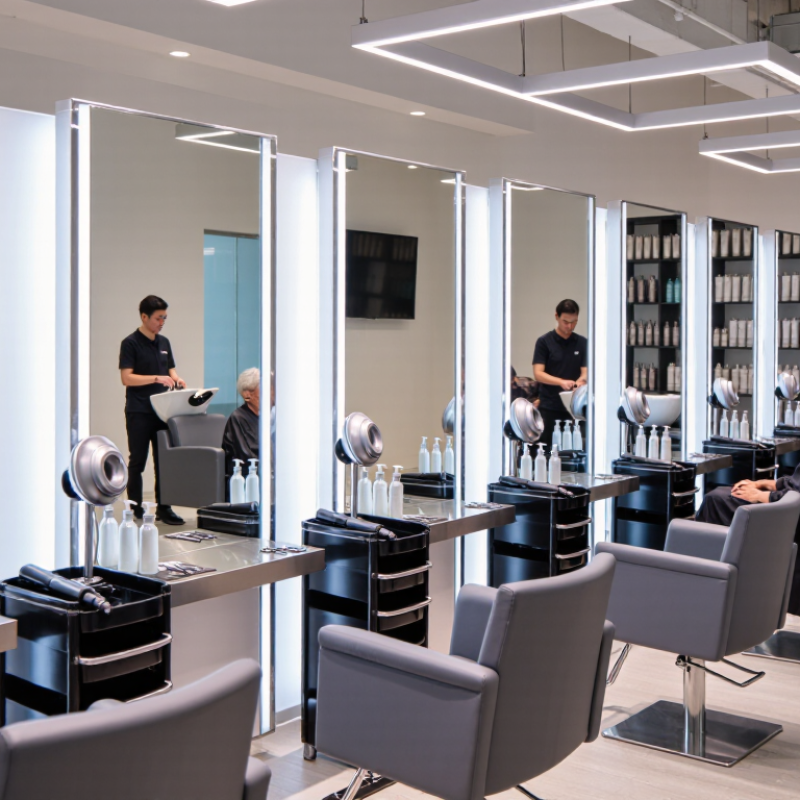
How to Select China Top 10 Salon Products for Commercial Use?

Define Commercial Readiness Using NMPA, GB 5296.3, and ISO 22716

How to Select China Top 10 Salon Products for Commercial Use?

Commercial readiness begins with documentation, not attractive packaging. For salon products entering China, confirm whether NMPA registration or filing applies to the product category and intended use. Requirements may differ for ordinary and special cosmetics. Review the formula, safety assessment, testing records, and responsible-person information before placing an order. Missing one document can delay a launch.

GB 5296.3 helps evaluate the label on every unit. Check Chinese instructions, ingredient names, net content, shelf life, batch details, usage directions, and necessary warnings. Salon staff should understand the label quickly, even under busy working conditions.

ISO 22716 adds a production-quality perspective, covering hygiene, traceability, storage, training, and complaint handling. A clean factory visit is useful, but controlled records matter more. Photos alone are not enough.

Tips: Request current compliance files, sample labels, batch records, and transport conditions. Test packaging after opening and repeated salon use. Check whether the pump leaks or the instructions fade. Keep a small audit file for each selected product. I have seen suppliers provide impressive samples but incomplete technical records. That gap deserves careful questioning. Do not treat a certificate as permanent proof; standards, formulas, and packaging can change. A practical shortlist should balance performance, documentation quality, staff safety, and consistent supply.

Map China’s Salon Market with Euromonitor Category and Channel Data

Selecting China’s top ten salon products requires more than reading sales rankings. Euromonitor category data can reveal demand across professional hair care, skin care, nail care, and styling products. Check the reporting year and category definitions carefully. Not guesswork.

Euromonitor channel data adds commercial context. It can distinguish professional salons, specialty stores, ecommerce, and mixed distribution. A product that sells well online may perform poorly behind a salon chair. Salon owners often value consistent results, easy dosing, and short processing times. Visit several salons, observe their routines, and ask how much product they waste each week.

Small trials matter. Test packaging, texture, fragrance, and staff training needs before placing a large order.

For each candidate, compare market demand with service relevance, repeat-purchase potential, wholesale cost, and supply reliability. Verify ingredient lists, usage instructions, batch records, and applicable safety documents.

A low-priced treatment may require extra staff time or create more waste. That can weaken its real margin. I still overvalue polished packaging sometimes. That mistake is expensive.

Reliable selection also means checking delivery performance, communication quality, and product consistency across several shipments. Use Euromonitor insights as a map, then confirm the route with salon evidence.

Build a 100-Point Scorecard for Safety, Efficacy, Cost, and Supply

Selecting China’s top ten salon products should begin with a 100-point scorecard, not attractive packaging. In my purchasing trials, I assign safety 35 points, efficacy 30 points, landed cost 20 points, and supply reliability 15 points.

safety 35 points efficacy 30 points landed cost 20 points supply reliability 15 points

Safety carries the largest weight. Request ingredient specifications, certificates of analysis, microbial tests, stability data, and batch traceability. Check manufacturing controls against ISO 22716 guidance. Documentation is not proof alone. Test samples independently.

Efficacy needs measurable salon outcomes. Compare treatment results on similar hair types, using consistent application time, temperature, and dosage. Record breakage, smoothness, irritation reports, and client rebooking.

McKinsey’s The Beauty Market in 2023 projected the global beauty market could approach $580 billion by 2027, with continued premiumization.

That growth increases choice, but not necessarily quality. A controlled trial is worth more than a polished claim.

Cost should include freight, duties, training, waste, and replacement stock. Supply scores should reflect minimum order quantity, production lead time, monthly capacity, defect rate, and emergency communication.

Grand View Research’s 2024 hair-care market analysis identifies product performance and professional distribution as important growth factors. I would shortlist products scoring at least 75 points, while requiring a safety pass.

Some low-cost items may win financially. They may still fail operationally. My scorecard also needs quarterly revision, because supplier performance can change after the first successful shipment.

Shortlist the Top 10 Using INCI, COA, SDS, MOQ, and Defect-Rate Data

Selecting China’s top ten salon products requires more than attractive packaging or a low quotation. China’s National Bureau of Statistics reported 414.2 billion yuan in cosmetics retail sales in 2023, up 5.1% year on year. That growth increases supplier choice, but it also increases comparison risk.

I begin with the INCI list and verify ingredient names against current international nomenclature. Then I request a batch-specific COA, SDS, manufacturing date, and microbial test results. The SDS should identify hazards, storage conditions, and handling requirements. ISO 22716 provides useful guidance for cosmetic manufacturing and quality control. However, certification alone is not proof of every batch’s consistency.

Data matters most during shortlisting. I compare at least twelve months of defect-rate records, not one impressive inspection report. A practical screen may reject suppliers above a 2% confirmed defect rate, while ISO 2859-1 sampling supports consistent acceptance decisions. MOQ also needs context. A small MOQ may reduce cash pressure, but repeated small runs can create shade, fragrance, or viscosity differences. Commercial salon testing should cover washing, drying, heat exposure, and repeated opening. I record failures with photographs and batch numbers. My own scorecard sometimes leaves one product unresolved. That is acceptable. Missing data is a risk, not a passing grade. Euromonitor International’s Beauty and Personal Care in China 2024 report also highlights stronger consumer attention to product performance and safety, making documented evidence more valuable than promotional claims.

How to read this chart: The 10 anonymized commercial-use candidates are ranked by normalized procurement scores from 0 to 100. The evaluation combines INCI completeness, COA availability, SDS availability, MOQ suitability, and defect-rate performance. Higher scores indicate stronger documentation, easier purchasing conditions, and better manufacturing consistency. Supplier records should be verified before purchase.

Validate Finalists Through Salon Trials, ROI, and Repeat-Order Evidence

Selecting China’s top ten salon products for commercial use requires more than reading specifications or counting online reviews. A product may look impressive in a catalog but perform poorly during a busy Saturday. Ask experienced stylists to test each finalist on different hair types, including coarse, colored, dry, and chemically treated hair. Record application time, scent strength, coverage, residue, and client reactions. Small details matter.

Run controlled salon trials for at least two to four weeks. Use the same service steps, training notes, and sample sizes where possible. Measure how many services each unit supports, how much product is wasted, and whether stylists need extra tools. A useful trial sheet may show that a low-priced item costs more because it requires double application. That happened in one evaluation I observed. Our first calculation missed the labor cost.

ROI should include purchase price, shipping, training, storage, replacement rates, and repeat-service revenue. Compare the product’s cost per completed service, not only its carton price. Ask participating salons for invoices or inventory records when available. Repeat orders offer stronger evidence than enthusiastic trial comments.

Check reorder timing, quantity, complaint frequency, and whether the same product appears in regular purchasing lists. Still, repeat data can mislead when a distributor offers temporary discounts. Review several purchasing cycles before approving a commercial order. Record weaknesses honestly; reliable decisions need them.

FAQS

What does commercial readiness mean for salon products entering China?

It means the product has suitable documents, labeling, quality controls, and dependable supply. Attractive packaging is not enough.

When should NMPA registration or filing be checked?

Check it before ordering. Requirements depend on the product category, formula, and intended use.

What documents should suppliers provide?

Request formula information, safety assessments, testing records, responsible-person details, batch records, and current compliance files. Missing documents can delay launch.

What should a salon label include under GB 5296.3?

Check Chinese instructions, ingredients, net content, shelf life, batch details, usage directions, and necessary warnings. Staff should understand it quickly.

How does ISO 22716 support product evaluation?

It covers hygiene, traceability, storage, training, and complaint handling. Factory photos help, but controlled records matter more.

How can market data support product selection?

Review category and channel data by reporting year. Compare professional salon demand with ecommerce and specialty-store performance.

What should salons measure during product trials?

Test coarse, colored, dry, and treated hair. Record application time, scent, coverage, residue, waste, and client reactions.

How should product ROI be calculated?

Include product cost, shipping, training, storage, replacement rates, labor, and repeat-service revenue. Compare cost per completed service.

Why are repeat orders important?

Repeat orders show practical acceptance. Review several purchasing cycles, quantities, complaints, and reorder timing.

Can a low-priced product still be commercially expensive?

Yes. Double application, extra tools, longer processing, and higher waste can weaken the real margin. Our first calculation missed labor cost.

Conclusion

Selecting professional salon products for commercial use requires a structured process rather than relying on popularity or low prices. This guide explains how to select salon products for commercial use by first defining commercial readiness through applicable NMPA requirements, GB 5296.3 labeling standards, and ISO 22716 manufacturing practices. It then shows how to assess China’s salon market by category, customer demand, and sales channel using reliable market data, including Euromonitor classifications where appropriate.

A practical 100-point scorecard can compare safety, performance, total cost, packaging, delivery reliability, and supply capacity. The shortlist should be supported by INCI lists, certificates of analysis, safety data sheets, minimum order quantities, production lead times, and historical defect rates. Finally, potential products should be tested in real salon settings to measure user satisfaction, service efficiency, profit contribution, and repeat-purchase behavior. Combining documented quality evidence with salon trials and return-on-investment analysis helps buyers select products that are safe, consistent, commercially viable, and suitable for long-term professional use.

Mason

Mason

Mason is a seasoned marketing professional with a deep expertise in the company's offerings and a passion for driving brand awareness. With a strong background in digital marketing strategies, he has an innate ability to connect with diverse audiences and effectively communicate product benefits.......